


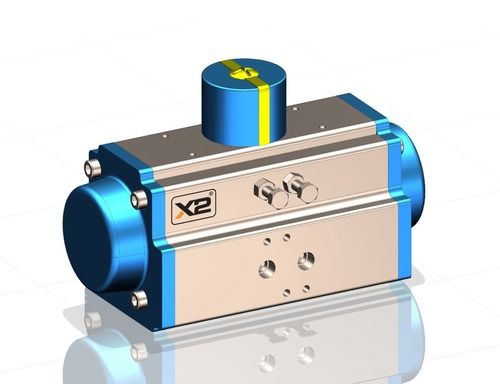
Pneumatic Actuator
4000 INR/Unit
Product Details:
- Pressure Max 8 bar (116 psi)
- Connection ISO 5211 Direct Mounting
- Accuracy High Positioning Accuracy
- Function Quarter Turn ON-OFF Control of Valves
- Size 32 mm to 300 mm
- Click to View more
X
Pneumatic Actuator Price And Quantity
- 40000.00 - 400000.00 INR/Unit
- 4000 INR/Unit
- 10 Piece
Pneumatic Actuator Product Specifications
- 32 mm to 300 mm
- ISO 5211 Direct Mounting
- High Positioning Accuracy
- Quarter Turn ON-OFF Control of Valves
- Max 8 bar (116 psi)
Product Description
Experience the latest in precision and control with our famed Pneumatic Actuator, crafted for rarefied industrial requirements and offering terrific performance. Constructed from extruded, hard-anodized aluminum, this rare actuator ensures durability, corrosion resistance, and high positioning accuracy. Access advanced features such as single or double acting function, NAMUR & ISO 5211 interfaces, and a reliable visual indicator. Suited for quarter-turn on-off control of valves (32 mm-300 mm), the actuator supports a wide pressure and temperature range. Trusted by leading exporters, manufacturers, and suppliers across India.
Versatile Industrial Usage & Advantages
This pneumatic actuator is designed for precise ON-OFF control of various industrial valves, offering both single and double acting configurations. The high torque output and adjustable travel stops facilitate consistent, reliable operations in demanding environments. Its compact design, corrosion resistance, and rare wide temperature compatibility make it a favoured choice for water treatment, oil & gas, chemical plants, and automotive facilities, ensuring seamless integration wherever quick, accurate valve automation is needed.
Export Market, Shipment & Domestic Reach
Our famed pneumatic actuators are a rare favorite in international markets, with shipment and packing handled using robust materials for global transport services. Exported to Asia, Africa, the Middle East, and Europe, each actuator is dispatched promptly to ensure timely delivery. Flexible payment terms are available for ease of transactions. We serve all major domestic markets within India, with organized packing and dispatch ensuring secure goods movement to your facilities.
Versatile Industrial Usage & Advantages
This pneumatic actuator is designed for precise ON-OFF control of various industrial valves, offering both single and double acting configurations. The high torque output and adjustable travel stops facilitate consistent, reliable operations in demanding environments. Its compact design, corrosion resistance, and rare wide temperature compatibility make it a favoured choice for water treatment, oil & gas, chemical plants, and automotive facilities, ensuring seamless integration wherever quick, accurate valve automation is needed.
Export Market, Shipment & Domestic Reach
Our famed pneumatic actuators are a rare favorite in international markets, with shipment and packing handled using robust materials for global transport services. Exported to Asia, Africa, the Middle East, and Europe, each actuator is dispatched promptly to ensure timely delivery. Flexible payment terms are available for ease of transactions. We serve all major domestic markets within India, with organized packing and dispatch ensuring secure goods movement to your facilities.
| Designs Features | ||
| 1 | Pneumatic Actuator | Single Acting/ Double Acting |
| 2 | Actuatorn | 90 Quoter turn |
| 2 | Temperature Range: | |
| Standard | -20C to +80C | |
| Low Temperature | -35C to +80C | |
| High Temperature | -15C to +150C | |
| 3 | Air Supply Min: | 2.5 Bar |
| 4 | Air Supply Max: | 8 Bar |
| 5 | Travel Adjustment | Range 5 fro the rotation at 0 to 90 |
| 6 | Design Standard | ISO 5211 |
| Key Features | ||
| Compact Design | ||
| Double-Acting and Spring-Return Options | ||
| High Torque Output | ||
| Durability and Reliability | ||
| Adjustable Travel Stops | ||
| Corrosion Resistance | ||
| Wide Temperature Range | ||
| Easy Integration | ||
| High Tensile Springs | ||
| Technical Specifications | ||
| Sr.No. | Description | Material |
| 1 | Body | Extruded Aluminium Hard Anodized |
| 2 | CAPCS & RACK | Aluminium Pressure Die Cast |
| 3 | PINION | EN8 |
| 4 | SEALS | BUNA-N |
| 5 | Axis | Alloy Steel |
| 6 | Spring | Spring Steel (Nickel Plated) |
FAQ's of Pneumatic Actuator:
Q: How do I select between single acting and double acting pneumatic actuators?
A: Choosing between single and double acting actuators depends on your application's specific needs. Single acting actuators use air pressure in one direction (with spring return), while double acting types use air to move both ways, offering more control and versatility in automation processes.Q: What makes this pneumatic actuator ideal for harsh industrial environments?
A: This actuator features an extruded anodized aluminum body and die-cast, polyester-coated end caps, ensuring resistance to corrosion and mechanical stress. It's also suited for a wide temperature range and high pressure, making it reliable in diverse and challenging industrial settings.Q: Where can these pneumatic actuators be used?
A: Our pneumatic actuators excel in water treatment plants, chemical processing units, oil & gas sectors, and various automation-driven industries, thanks to their robust construction, compact design, and high torque output for valve control.Q: What is the process for integrating this actuator with my existing valve setup?
A: Integration is straightforward due to the ISO 5211 direct mounting and NAMUR interfaces. Simply match the actuator's mounting interface with your valve's connection standard for quick and secure installation without complex adapters.Q: When should I opt for NBR or Viton seal material?
A: Choose NBR seals for general applications handling standard media, while Viton seals are recommended for processes involving aggressive chemicals or higher temperatures, ensuring longer service life and optimal sealing performance.Tell us about your requirement

Price:
Quantity
Select Unit
- 50
- 100
- 200
- 250
- 500
- 1000+
Additional detail
Mobile number
Email


X2 VALVES PRIVATE LIMITED
GST : 24AAACX4564F1ZE
Contact Details

- Survey No.980/1, B/h Rangani Engineering, Captain Gate, Shapar (veraval), Rajkot - 360024, Gujarat, India
- Phone : 08071931331

- Mr Sagar Donga (Marketing Manager)
- Mobile : 08071931331
- Send Inquiry
 Send Inquiry
 Send Inquiry
 Send SMS
X2 VALVES PRIVATE LIMITED
All Rights Reserved.(Terms of Use)
Developed and Managed by Infocom Network Private Limited.
Developed and Managed by Infocom Network Private Limited.

